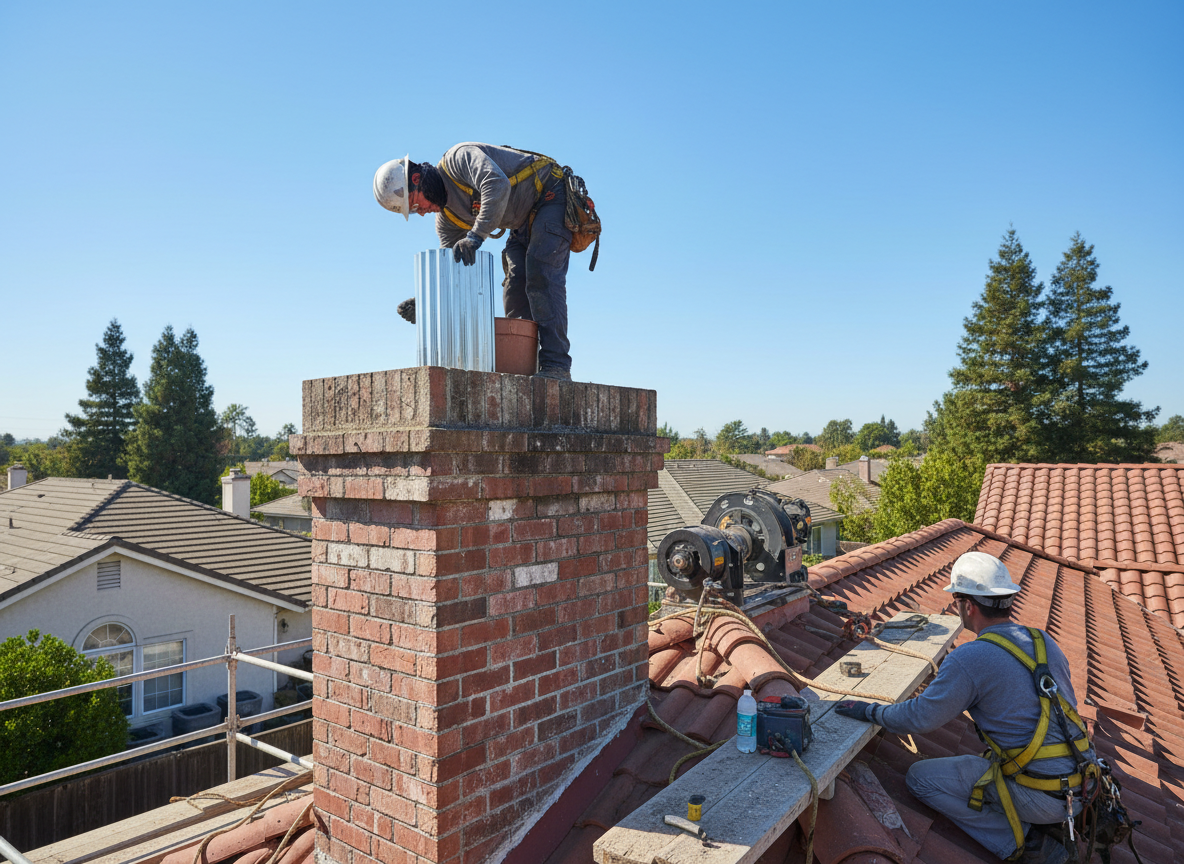
Oakley homes built before 1950 often have original clay tile liners that crack when water freezes inside the flue. Relining with a stainless steel or cast-in-place liner restores draft and prevents creosote buildup that accelerates during Cincinnati winters. We measure the exact flue diameter at the top and bottom because many Oakley chimneys taper or have offsets that standard liners cannot pass without custom fabrication.
Heavy rain and snow load on the Oakley ridge can force water through failed mortar joints above the roofline. A new liner includes a rain cap and a full-length insulation wrap to keep the flue temperature stable and reduce condensation that eats through metal over time. We also check the cleanout door seal because older homes in the 45209 zip often have doors that no longer close tightly after decades of use.
Edge cases appear when a chimney serves both a fireplace and a furnace. The combined exhaust requires a properly sized liner that maintains draft for both appliances without backdrafting into living spaces. We run a camera inspection first to locate any mid-chimney breaks caused by settling on the clay-heavy soil common in this part of Hamilton County.
Code and Safety Notes
Cincinnati requires a permit for liner replacement when the work alters the flue size. We pull the permit and schedule the required inspection so the job meets current IRC standards for clearance and termination height above the roof.
Technician insight
In Oakley, the thing that catches most people out with chimney relining is the narrow, offset flues in homes built on the old trolley-line streets south of Wasson Road. Those tight turns mean we often have to cut access holes in the attic to guide the liner through, something homeowners never expect until the camera shows the bend.
Cracked Clay Liner on a Two-Story Oakley Home
A homeowner noticed water stains on the second-floor ceiling after a heavy January rain. Camera inspection revealed multiple cracked clay tiles and standing water at an offset. We installed a continuous stainless liner with insulation wrap, added a new cap, and restored draft without enlarging any existing openings.
How it works
- 1
Camera Inspection
We insert a high-resolution camera from the top and bottom to map cracks, offsets, and creosote depth before any liner is ordered.
- 2
Flue Measurement and Sizing
Exact diameter and length are recorded at multiple points because Oakley chimneys frequently change size between floors.
- 3
Liner Installation
A stainless steel liner is lowered and secured with the proper insulation wrap, then connected to the appliance with a sealed thimble.
- 4
Final Test and Cap
Smoke testing confirms draft, a new rain cap is installed, and the cleanout is resealed before we leave the site.
Pricing
Cost depends on chimney height, number of offsets, and whether one or two appliances share the flue.