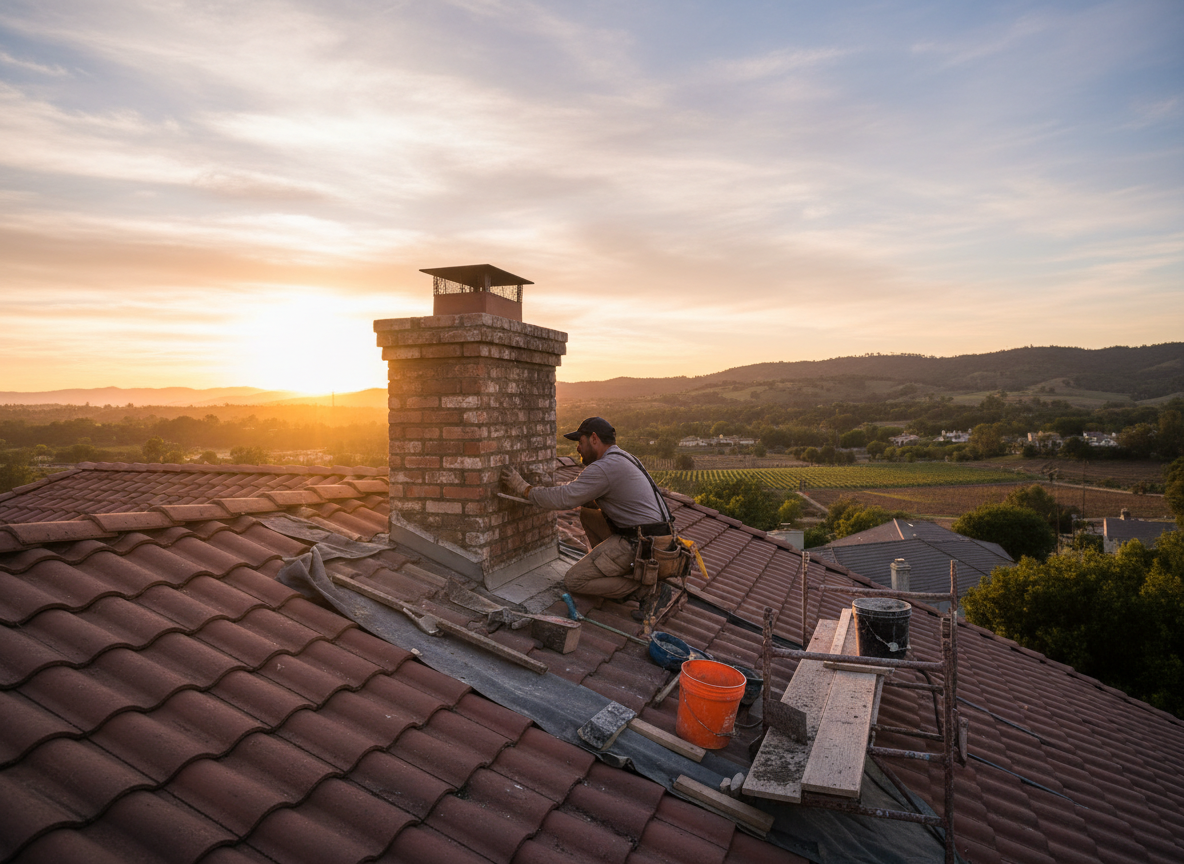
Oakley’s housing stock consists largely of brick homes built between 1900 and 1930. These structures feature tall, straight chimneys with original clay flue liners that have settled unevenly over decades. Freeze-thaw cycles common to the Cincinnati region drive water into hairline mortar joints, then expand and spall the brick faces. Repair crews must match the original lime-based mortar rather than modern Portland mixes to avoid cracking the softer surrounding masonry during the next winter.
Water intrusion often appears first as staining on second-floor ceilings near the chimney breast. In many Oakley blocks the roof pitch and narrow side yards limit access, so scaffolding or roof jacks become necessary before any tuckpointing or crown work begins. Technicians also check for creosote staining inside the flue because years of wood-burning in these older fireplaces can hide liner cracks that allow carbon monoxide to migrate into living spaces.
Cincinnati building practices require that any flue repair maintain the original draft capacity; narrowing the liner to add a stainless-steel insert without proper sizing calculations can create backdraft issues during spring wind events. Homeowners are advised to schedule repairs after the last hard freeze but before the first heavy spring rain so new mortar can cure without repeated saturation.
Terrain around Oakley slopes gently toward the Mill Creek valley, which means south-facing chimneys receive more sun and experience faster thaw cycles than those on the north side of the same block. This microclimate difference shows up as accelerated deterioration on one elevation while the opposite side remains intact, requiring selective rather than full-chimney repointing on many jobs.
Technician insight
In Oakley, the thing that catches most people out with chimney repair is how the early-1900s brick homes on the south side of the block lose mortar joints twice as fast as the north side because of extra sun exposure during our freeze-thaw winters; homeowners often miss the one-sided damage until water shows up inside.
Oakley Chimney Crown Failure
Homeowner in Oakley noticed interior ceiling stains after a March thaw. Inspection revealed a cracked crown allowing meltwater to run down the flue. Crew rebuilt the crown with proper slope and installed new step flashing to tie into the existing slate roof. No further leaks occurred through the next winter.
How it works
- 1
Site Inspection
Technician examines the chimney from roofline to hearth, checking mortar joints, crown condition, and flue alignment for signs of settlement common in Oakley’s older brick homes.
- 2
Moisture and Draft Assessment
Moisture meter readings and smoke testing identify active leaks or liner cracks created by repeated freeze-thaw cycles in the Cincinnati climate.
- 3
Material Matching and Repair
Crew selects lime-based mortar to match original construction, then performs tuckpointing, crown rebuilding, or flue liner work while protecting surrounding roof surfaces.
- 4
Final Verification
Post-repair smoke test and visual inspection confirm draft performance and water tightness before the job is signed off.
Pricing
Upfront quotes provided after on-site inspection; final cost depends on chimney height, extent of masonry damage, and roof access constraints.