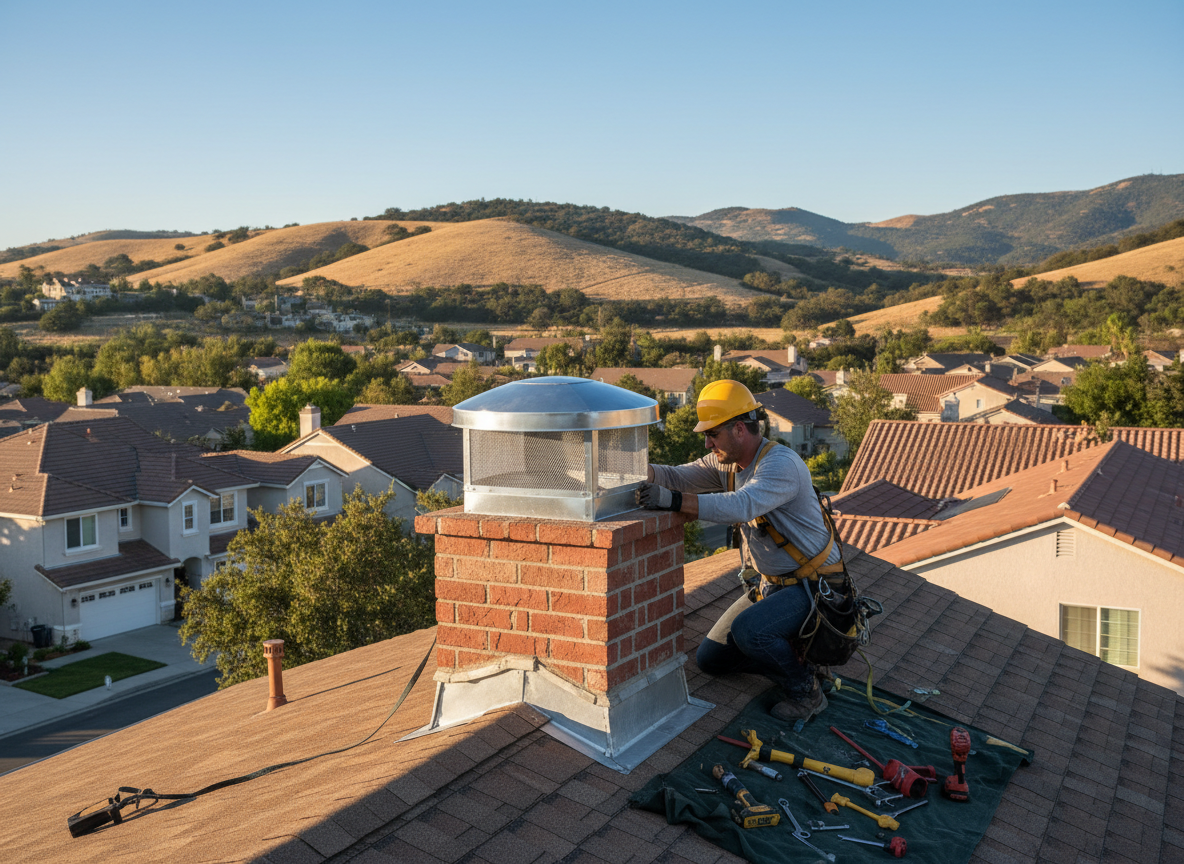
Oakley’s older brick and masonry chimneys, common in homes built before 1960, often need caps that fit the exact flue dimensions to avoid restricting airflow. Stainless steel or copper caps hold up better against the freeze-thaw cycles and heavy spring rains that hit the Oakley area, while galvanized options corrode faster when exposed to the constant moisture that collects on north-facing roofs. Proper flashing integration around the crown is critical because many Oakley chimneys sit on steep gables where wind-driven rain pushes water under poorly sealed edges.
Edge cases we see regularly include multi-flue chimneys serving both furnace and fireplace, where a single oversized cap can create negative pressure and pull exhaust back into living spaces. We also check for code-required clearance from nearby trees or power lines when working on two-story homes near Hyde Park and Norwood. Installing a cap without first inspecting the crown for cracks leads to repeated leaks, so we always verify the masonry is sound before bolting down the new unit.
Homeowners sometimes try to add a cap themselves using universal kits that don’t match the flue liner, resulting in gaps that allow squirrels and rainwater inside. We measure each flue on site and select a cap with the correct spark screen mesh to meet Cincinnati’s requirements for solid-fuel appliances. This prevents the small fires and carbon monoxide issues that arise when debris blocks the draft path during winter use.
Technician insight
In Oakley, the thing that catches most people out with chimney cap installation is the steep roof pitch on pre-war homes near the Wasson Way trail; you can’t just slap a universal cap on without custom flashing or you’ll be back in six months when the next nor’easter drives water under the crown.
Oakley Two-Story Chimney Cap
Homeowner reported water stains on the fireplace mantel after heavy rain. We found the original cap missing its flashing on a north-facing chimney serving a 1940s brick home. We removed the damaged unit, installed a properly sized stainless cap with new step flashing, and sealed the crown. No further water entry occurred during the following winter storms.
How it works
- 1
Site Assessment
We measure the flue, inspect the crown, and note roof pitch and access points from the Oakley address.
- 2
Material Selection
We choose stainless or copper cap sized to the flue and confirm spark screen meets local venting needs.
- 3
Removal and Prep
Old cap and flashing are removed, crown cracks are noted, and the surface is cleaned for new seal.
- 4
Installation and Sealing
New cap is secured with proper flashing and high-temp sealant, then tested for draft and fit.
Pricing
Pricing varies by chimney height, flue count, and roof access; we provide an upfront quote after the site visit.