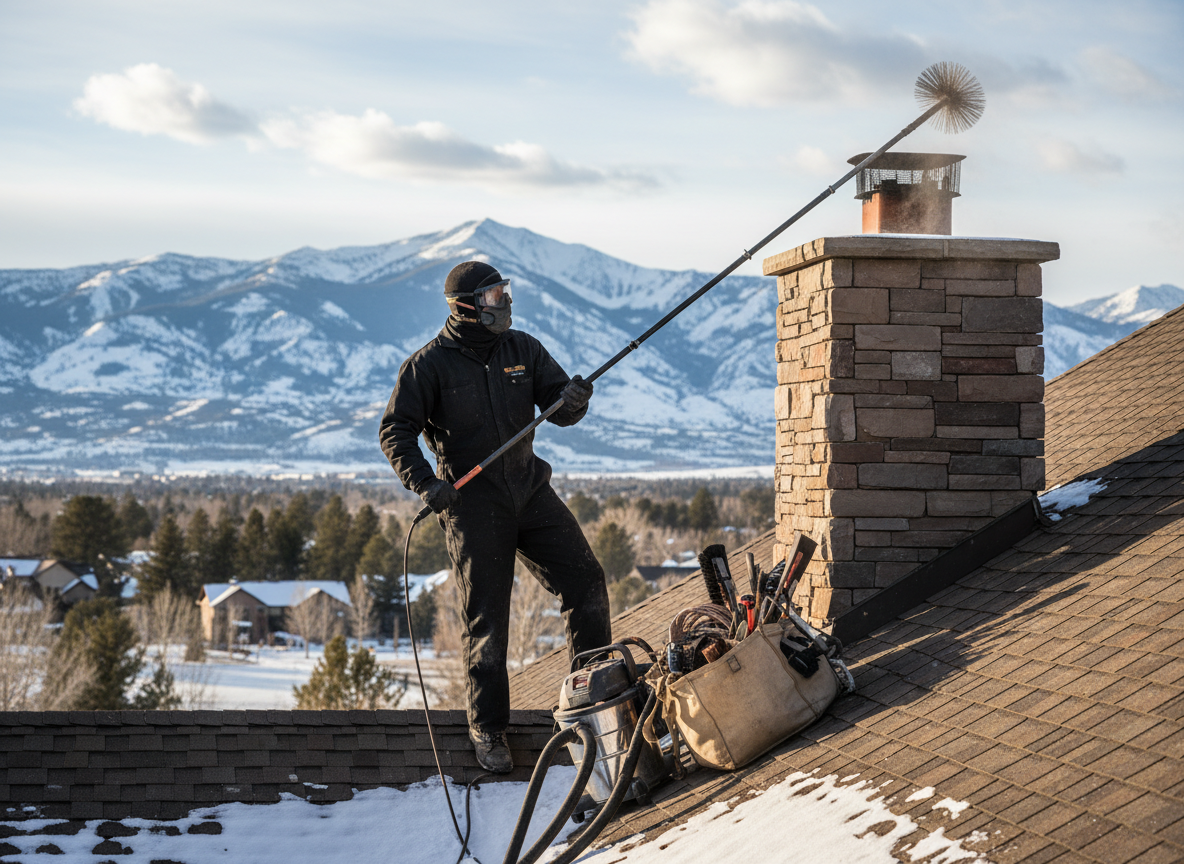
Oakley homes built before 1960 often feature narrow brick flues that trap creosote faster than newer installs because of the tight turns and smaller diameters common along streets like Madison and Wasson. Winter heating cycles in Hamilton County push more wood smoke through these stacks, so annual cleaning prevents the glazing that turns light soot into hard deposits requiring rotary tools instead of standard brushes. Unity Wrench techs start every job by checking for cracked flue tiles or missing mortar that can drop debris during cleaning and create hidden draft problems later.
Access on many Oakley properties is limited by steep roofs and close neighboring structures, so technicians use sectional rods and camera inspection before and after to confirm the full height is cleared without forcing equipment. Nearby areas like Hyde Park and Norwood share the same post-war housing stock where unlined chimneys are still common, making it critical to verify liner condition rather than assuming modern code standards apply. Skipping this step frequently leads to callbacks when homeowners notice smoke smell after the first cold snap.
Unity Wrench operates from 3075 Vandercar Way in Cincinnati and keeps crews on call around the clock because blocked flues do not wait for business hours. Every cleaning includes removal of all loose debris from the smoke chamber and hearth, plus a written report on any visible defects that could affect next season's use. Homeowners in the Oakley area are encouraged to schedule before the first freeze so the work happens in dry conditions rather than on ice-covered roofs.
Technician insight
In Oakley the thing that catches most people out with chimney cleaning service is the narrow flues in pre-war brick homes along Madison Road where standard brushes miss the corners and leave glazing that forces a second visit once winter starts.
Draft Loss After Years of Use
Homeowner in Oakley reported weak draft and occasional smoke in the living room during early fall. Inspection showed thick creosote layers inside a narrow unlined flue typical of the neighborhood's older stock. Crew removed the buildup with sectional rods and confirmed clear passage with camera. Draft returned to normal and no further issues were reported that season.
How it works
- 1
Site Assessment
Technician inspects exterior chimney, roof access, and interior hearth while noting flue size and any visible damage before starting tools.
- 2
Protective Setup
Drop cloths and vacuum systems are placed to contain soot, with furniture and flooring covered on the main floor and basement levels.
- 3
Mechanical Cleaning
Brushes and rods sized to the flue remove creosote and debris from top to bottom, followed by smoke chamber clearing.
- 4
Post-Clean Verification
Camera inspection confirms clearance, any remaining issues are noted, and the homeowner receives a written summary of findings.
Pricing
Upfront quotes provided after on-site assessment; cost varies with flue height, access difficulty, and deposit thickness.