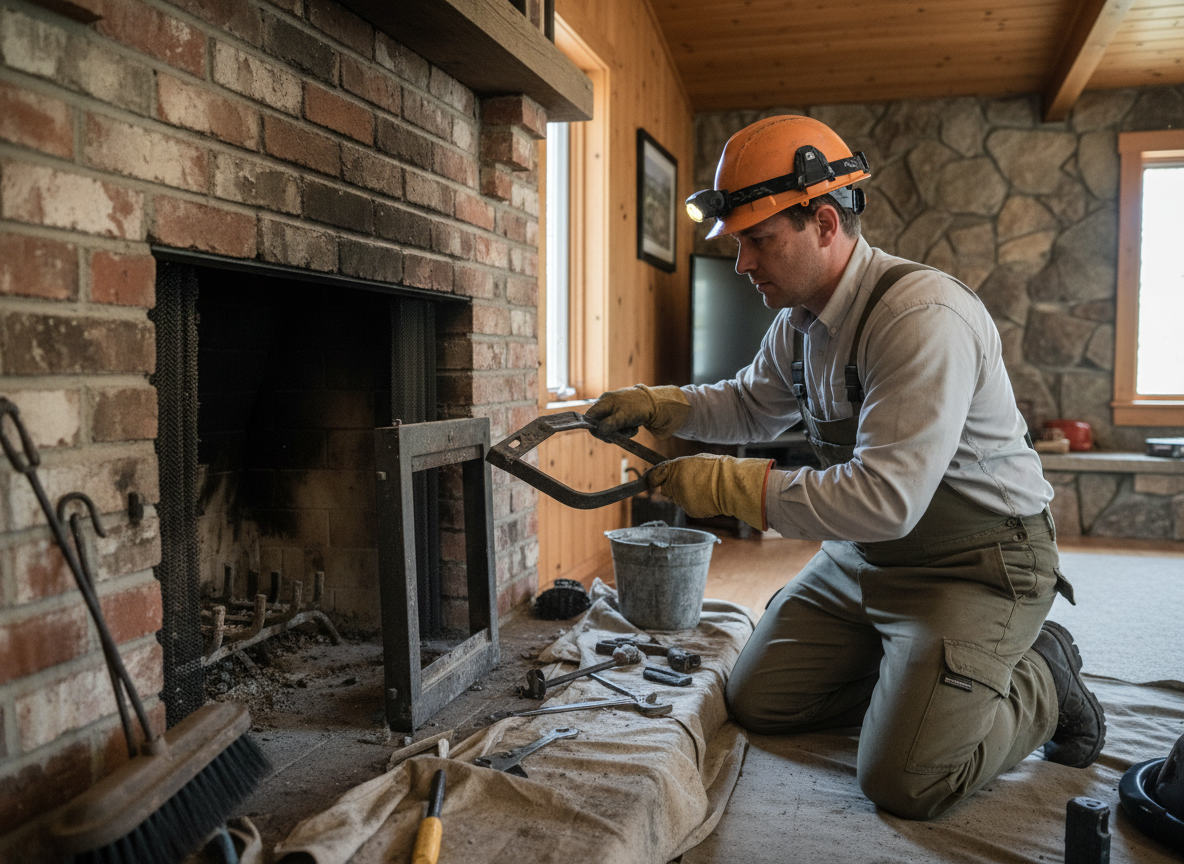
Oakley homes built before 1950 often have masonry chimneys with cast-iron or steel throat dampers that corrode from years of creosote, moisture, and Cincinnati's freeze-thaw winters. A seized damper lets cold air pour into the living space and allows embers to escape when closed improperly. Technicians at Unity Wrench first inspect the flue from the firebox up to the crown, checking for warped plates, broken hinges, and missing stops that prevent full closure.
Repair begins with removing the old damper assembly without damaging the surrounding brick or flue tile. Replacement units are fitted to the original dimensions because many Oakley chimneys were built to non-standard sizes. Technicians also verify the smoke chamber draft and confirm the new damper operates smoothly by hand before reinstalling the firebox surround. Homeowners in Oakley frequently report drafts that disappear after this work, especially during the first cold snap of November.
Edge cases include dampers installed behind ornate Victorian mantels where access requires partial removal of decorative tile. In those situations the crew works from the roof down to avoid disturbing interior finishes. Water intrusion from failed flashing above the damper is another common Oakley issue that must be corrected at the same time or the new damper will rust again within two seasons.
Technician insight
In Oakley the thing that catches most people out with chimney damper repair is the 1920s–1940s brick homes where the original cast-iron damper sits behind a narrow smoke chamber that has settled unevenly over time. The plate binds on one side and homeowners assume the whole chimney needs rebuilding when a new damper with adjustable stops solves the draft problem.
Stuck Damper on Hyde Park Avenue
Homeowner in an Oakley brick two-story called after smoke rolled into the room during a fireplace test. Inspection showed the original 1930s damper had rusted shut and the hinge pin was sheared. Crew removed the assembly from the roof, fitted a new throat damper sized to the existing opening, and verified full closure. Cold air stopped entering the living room and the fireplace now drafts correctly.
How it works
- 1
Initial Inspection
Technician climbs to the roof and examines the damper from above while checking flue condition and crown integrity.
- 2
Access and Removal
Old damper is freed from the smoke chamber, noting any warped metal or broken hinges that affect fit.
- 3
New Damper Installation
Correct size unit is installed and tested for full open and closed positions with proper stop engagement.
- 4
Final Draft Check
Firebox is lit briefly to confirm smoke pulls correctly and no cold air enters when the damper is closed.
Pricing
Upfront quote provided after on-site inspection of the chimney and damper condition.