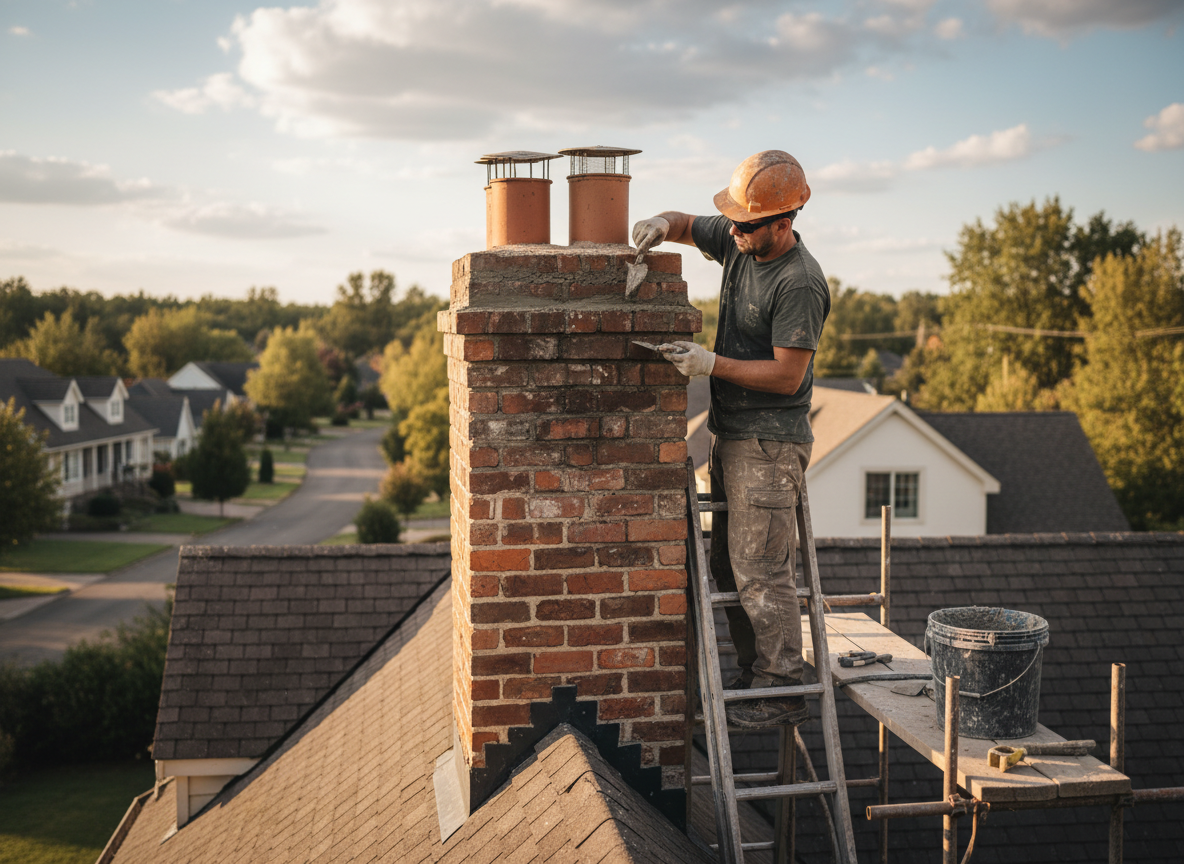
Oakley’s brick homes from the early 1900s through 1950s often show mortar failure where repeated winter freeze-thaw cycles push joints apart on south and west exposures. We use type N mortar matched to the original lime content so the repair flexes with the surrounding brick instead of cracking again within two seasons. Access on these narrow lots usually requires scaffolding or ladders set on the alley side to avoid disturbing established landscaping.
Before repointing we inspect the flue liner and crown for hidden water entry points that turn a simple mortar job into a larger rebuild. In the Oakley area, many chimneys sit directly above the main roof valley, so runoff during heavy spring rains can saturate the mortar bed from above. We remove only the deteriorated joints to a consistent depth of three-quarters inch and pack fresh mortar in two lifts to prevent voids.
Edge cases include chimneys that share a wall with a neighbor’s addition or those that have been painted multiple times; the paint film traps moisture and accelerates spalling. We never apply caulk or modern sealers over historic mortar because they trap salts and force the next failure deeper into the brick. Every job ends with a water test from the roof to confirm no new leaks appear at the repaired joints.
Technician insight
In Oakley, the thing that catches most people out with chimney mortar repair is how the narrow lots and mature trees force us to set up on the alley side, which changes scaffolding time and sometimes reveals rot in the flashing we could never see from the front yard.
South-side joints failing on a 1928 Oakley brick two-story
Homeowner noticed white powder on the attic floor after a hard freeze. We found open joints on the south face where sun and melt cycles had worked the mortar loose. After grinding and repointing with type N, we added a small cricket above the valley to divert water. No further staining appeared the following spring.
How it works
- 1
Site Assessment
We examine all four sides of the chimney from the roof, note joint condition, and check for water staining inside the attic.
- 2
Joint Removal
Failed mortar is ground out to sound material without damaging brick edges, using dust collection to keep the interior clean.
- 3
Mortar Application
Fresh type N mortar is packed in layers, tooled to match the original profile, and protected from rapid drying.
- 4
Final Inspection and Test
We run water across the crown and joints, photograph the finished work, and advise on any crown or cap issues found during access.
Pricing
Upfront quotes based on linear feet of joint repair and roof access difficulty; most Oakley jobs fall in the mid-range for older brick chimneys.