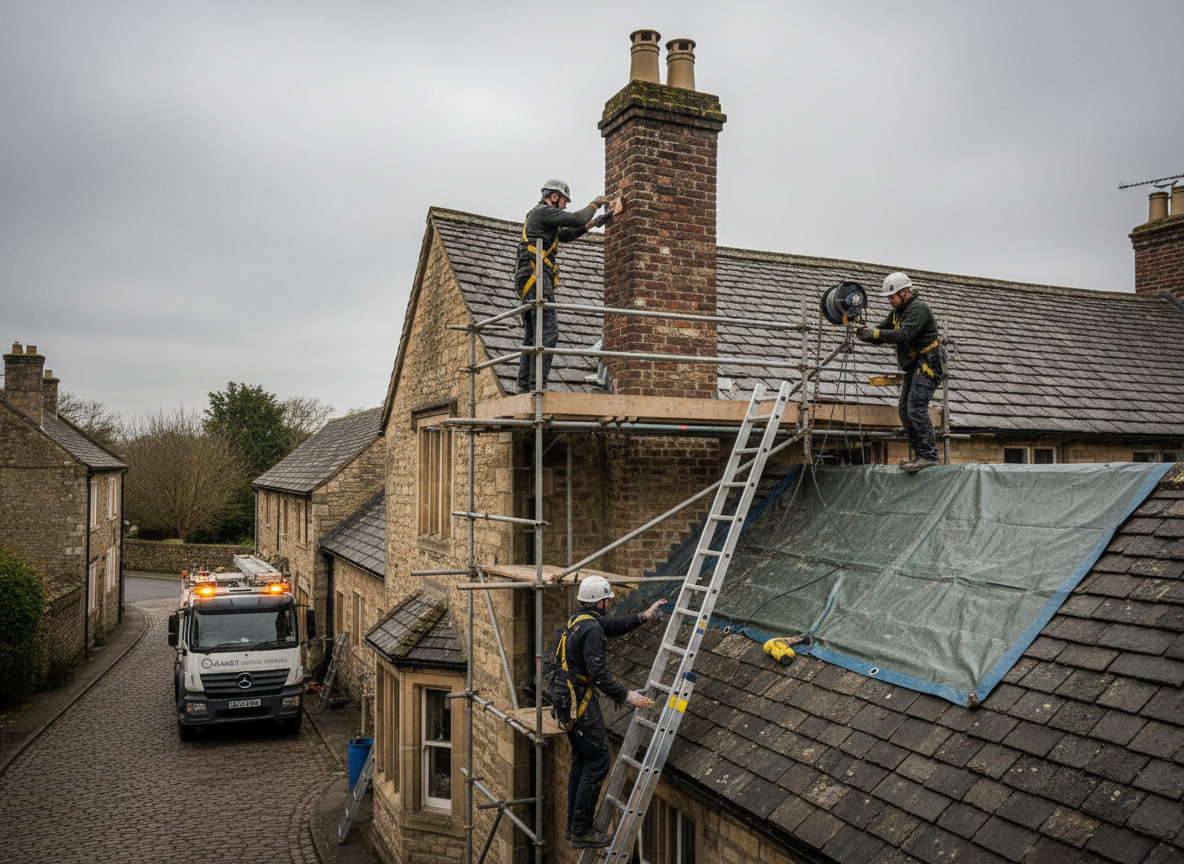
Oakley’s pre-war brick homes along Madison Road and surrounding blocks often feature chimneys built with lime mortar that has deteriorated after decades of freeze-thaw cycles common to southwest Ohio winters. When heavy rain or ice dams hit, water penetrates cracked crowns or missing flue tiles, sending soot and creosote into living spaces or creating carbon monoxide pathways. A true emergency call requires immediate isolation of the appliance, temporary weatherproofing of the crown, and a full internal camera scan before any permanent masonry work begins.
Cincinnati’s hilly terrain around Oakley means many chimneys sit on sloped roofs where ice buildup concentrates at the flashing line. Homeowners frequently discover issues only after water stains appear on second-floor ceilings during spring thaws. Emergency repairs here focus first on stopping active leaks with stainless-steel caps or sealant bridges, then scheduling follow-up tuckpointing once temperatures stabilize. Ignoring these steps risks rapid expansion of small flue cracks into full chimney separation.
Local building practices in Hamilton County require that any emergency liner replacement maintain the original flue size to preserve draft on older furnaces and fireplaces. Rushing a repair without confirming proper clearances to combustibles can create new code violations that surface during later inspections. Experienced crews carry pre-sized stainless liners and quick-set refractory materials sized for the narrow chimneys typical of 1920s–1940s Oakley construction.
Soil movement from the area’s clay-heavy ground occasionally shifts foundations enough to crack chimney bases, especially on properties near the old railroad corridor. When this occurs during a storm, the priority is stabilizing the stack with temporary bracing and notifying the homeowner of the need for a structural mason follow-up rather than attempting a cosmetic patch that will fail again.
Technician insight
In Oakley, the thing that catches most people out with emergency chimney repair is the hidden base cracking on pre-1950 homes near the rail line where clay soil heave shifts the foundation just enough to open mortar joints at grade level, something you only see once you dig out the landscaping.
Ice-Dam Leak on Madison Road Chimney
Heavy overnight freezing rain caused water to back up behind the crown on a 1930s brick chimney. Camera inspection revealed a separated flue tile and saturated brick. We installed a temporary stainless cap and sealed the crown edges to stop active dripping into the attic, then scheduled tuckpointing once the weather cleared.
How it works
- 1
Safety Shutdown
Disconnect fuel supply and block the flue opening to prevent carbon monoxide migration into the home while assessing the full extent of damage.
- 2
On-Site Diagnosis
Perform camera inspection of the flue, crown, and flashing to identify active leaks, loose bricks, or liner failures specific to the home’s age and roof pitch.
- 3
Temporary Containment
Install weatherproof cap or sealant barrier to stop water intrusion and protect interior finishes until permanent repairs can be scheduled.
- 4
Permanent Fix Planning
Provide detailed scope for tuckpointing, liner insertion, or crown rebuild using materials matched to the original masonry found in Oakley homes.
Pricing
Upfront quote provided after inspection; cost driven by extent of liner damage, masonry access, and roof pitch.