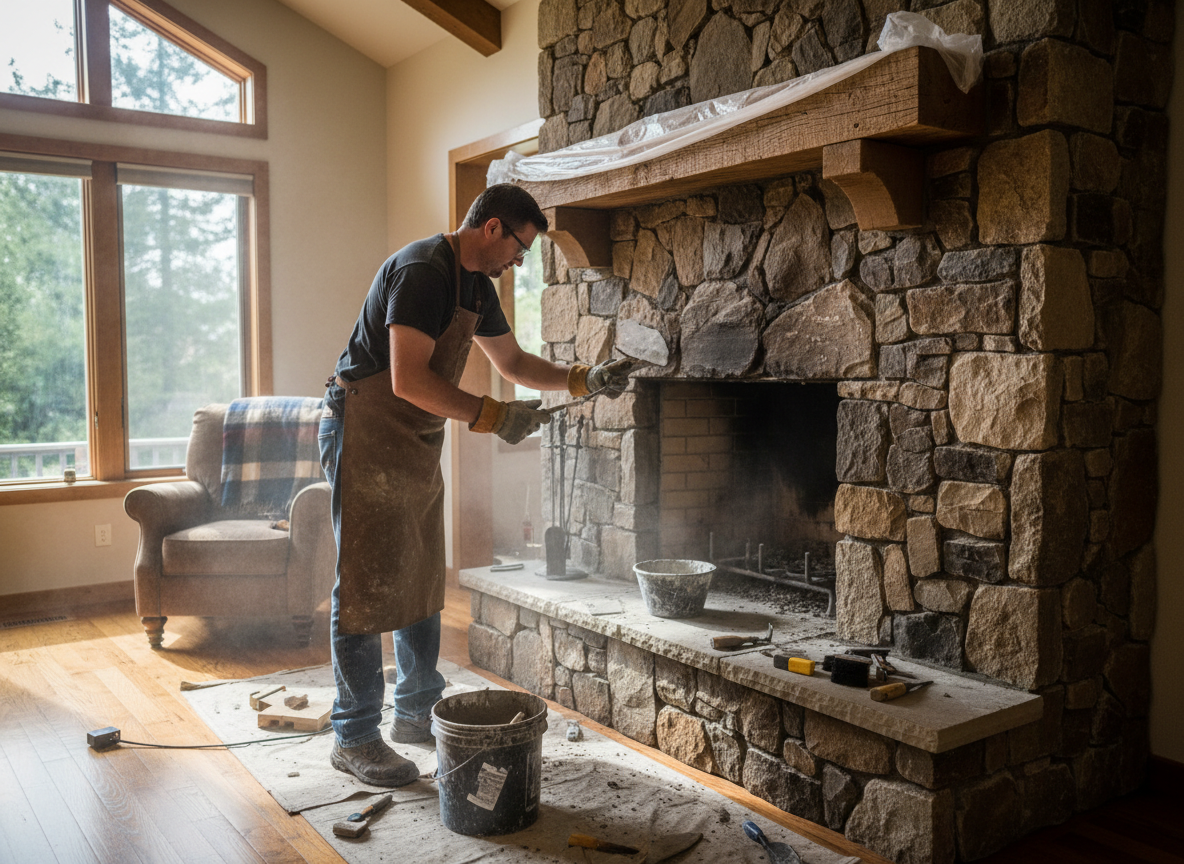
Oakley’s early-1900s brick homes sit on clay soils that shift with freeze-thaw cycles. This movement cracks firebox joints and lets water into the chimney chase. Restoration begins with removing loose mortar and damaged brick, then rebuilding with type-N mortar matched to the original lime content so the new work moves with the house instead of fighting it. We also check the throat and smoke shelf, because narrow shelves in these narrow flues trap creosote and block draft once winter temperatures drop below freezing.
Many Oakley fireplaces still have unlined clay tile flues installed before modern code. When tiles crack, carbon monoxide can migrate into second-floor bedrooms. We install stainless-steel liners sized to the appliance, then parge the exterior masonry with a breathable coating that sheds rain while allowing moisture vapor to escape. Homeowners often discover the real problem only after we open the firebox: rotted lintels or missing back hearth bricks that let embers reach the subfloor.
Before any work starts we verify the chimney height meets the two-foot, ten-foot rule relative to nearby roofs and trees. In Oakley’s tight lots this often means extending the chase rather than just relining. We finish by running a smoke test with the damper closed and the house under negative pressure to confirm no exhaust re-enters through windows or soffits.
Technician insight
In Oakley the thing that catches most people out with fireplace restoration is the way early brick homes on sloped lots settle unevenly, cracking the back hearth and letting embers reach the floor joists before anyone sees smoke in the basement.
Oakley Brick Fireplace with Settled Hearth
Homeowner reported occasional smoke smell on the first floor during cold snaps. Inspection showed a cracked back hearth and settled lintel in a 1920s Oakley brick house. We rebuilt the hearth, replaced the lintel, and installed a new stainless liner sized to the fireplace opening. Draft test passed and the smell disappeared.
How it works
- 1
Initial Inspection
We examine the firebox, damper, flue, and exterior masonry for cracks, spalling, and water intrusion common in Oakley brick homes.
- 2
Diagnosis and Plan
Findings are reviewed on site so the homeowner sees exactly which bricks, tiles, or lintels need replacement before any work begins.
- 3
Masonry and Flue Repair
Damaged brick and mortar are removed, new type-N mortar and matching brick installed, and a stainless liner fitted if the original clay tiles are compromised.
- 4
Testing and Cleanup
A smoke test confirms draft and containment, then the work area is cleared and the fireplace is left ready for use.
Pricing
Upfront quotes given after inspection; price depends on extent of masonry repair and whether a liner is required.