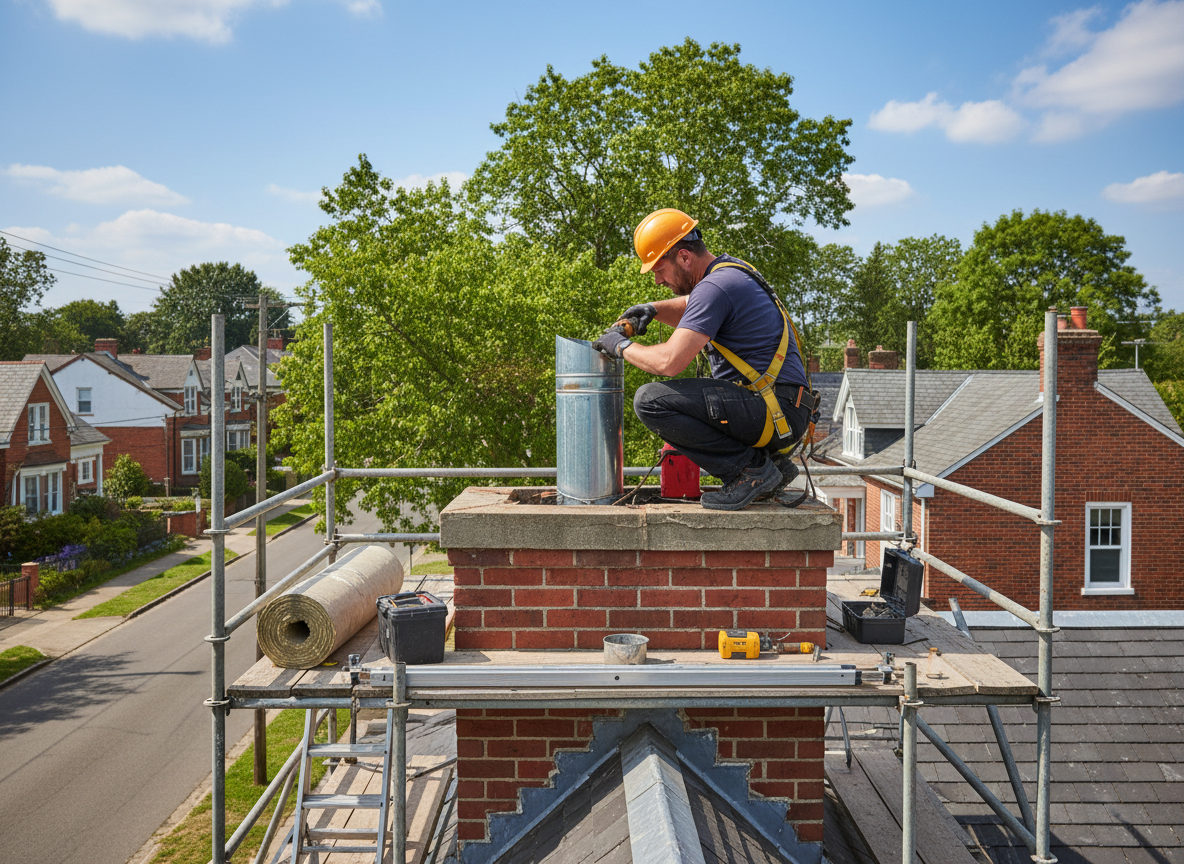
Metal chimneys in Oakley homes built before 1950 often show advanced rust along the seams where the flue meets the crown. Freeze-thaw cycles common to the Cincinnati region drive moisture into small pinholes, expanding them until carbon monoxide paths open inside the chase. Technicians at Unity Wrench start every job by removing the chimney cap and running a camera the full height to locate hidden perforations that standard visual checks miss.
When corrosion reaches the connector pipe on single-story ranches along Madison Road, replacement requires dropping the liner from the roof rather than cutting through finished ceilings. We use 304 stainless steel with a 0.018-inch wall to resist the acidic condensate that forms when gas furnaces cycle in shoulder seasons. Older terra-cotta lined metal stacks in two-story homes near the Oakley Square business district frequently need full chimney relining once the original metal has delaminated from decades of coal and wood soot.
Homeowners sometimes attempt to patch with high-temperature silicone, but that sealant fails within one heating season when the metal expands and contracts. Proper repair includes installing a new rain cap with a spark arrestor sized to the flue diameter and verifying draft with a manometer before leaving the site. These steps prevent water entry that would otherwise restart the rust cycle the following winter.
Technician insight
In Oakley the thing that catches most people out with metal chimney repair is how quickly the freeze-thaw cycles along the Little Miami watershed accelerate rust on the lower sections where the flue sits inside unheated basements; the metal sweats, traps moisture, and fails from the inside out long before the roof cap shows any sign.
Lower Flue Rust on Madison Road Home
Homeowner noticed water stains on the basement ceiling near the furnace. Camera revealed pinholes in the 1950s metal flue where it passed through the unheated foundation wall. We dropped a new stainless liner from the roof, sealed the connections, and restored draft without disturbing finished rooms.
How it works
- 1
Initial Inspection
Camera scan from roof to firebox to map every rust perforation and measure remaining metal thickness.
- 2
Material Selection
Choose liner gauge and alloy based on fuel type and existing chase dimensions found in Oakley brick homes.
- 3
Removal and Prep
Extract damaged sections, clean creosote and scale, then treat edges to stop further oxidation.
- 4
Installation and Test
Insert new liner, seal connections, reinstall cap, and confirm proper draft with combustion analyzer.
Pricing
Upfront quote provided after on-site inspection; final price depends on flue height, liner gauge required, and access constraints typical of Oakley two-story homes.