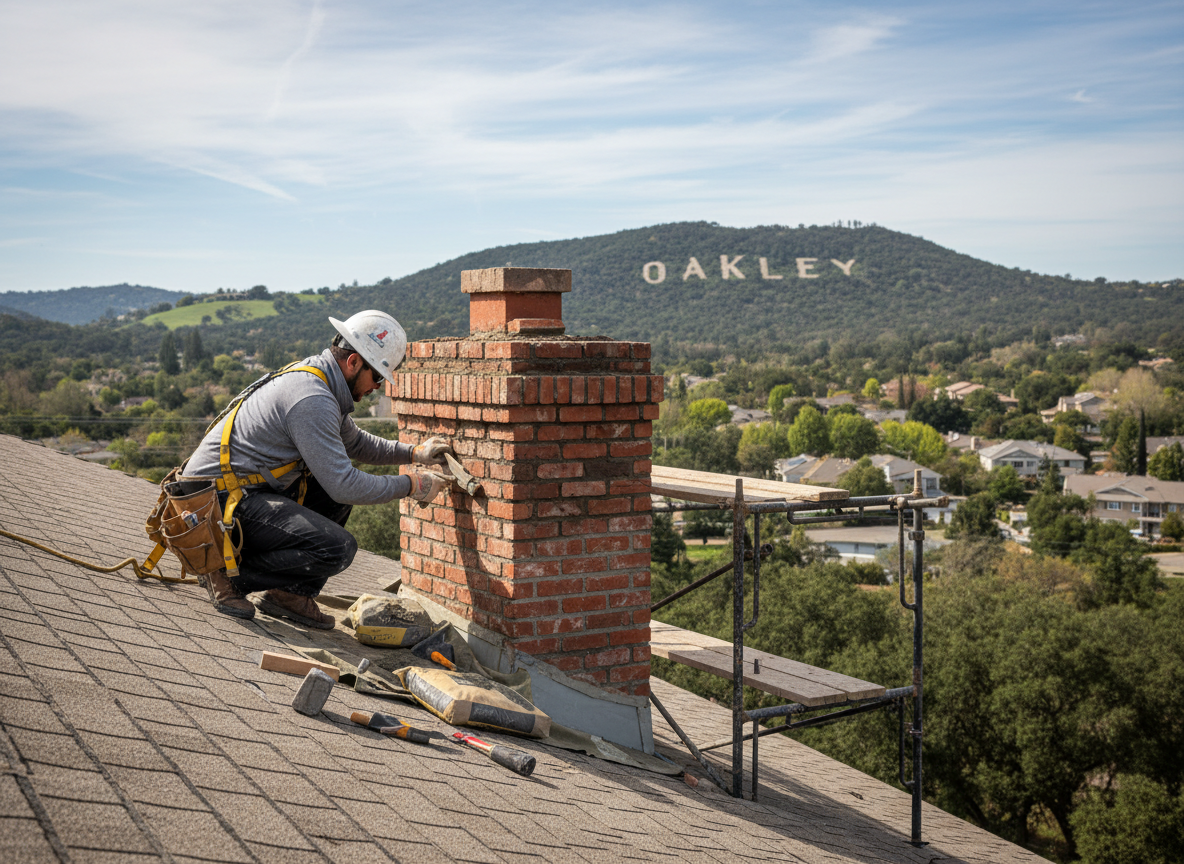
Oakley homes built in the early to mid twentieth century commonly feature brick chimneys tied into the original masonry. These structures face repeated freeze thaw cycles through Cincinnati winters that open mortar joints and allow water to reach flue tiles. Once moisture reaches the flue liner it accelerates spalling and can create carbon monoxide pathways if the damage reaches the smoke chamber. Technicians working these addresses routinely check both the exterior crown and the attic chase because water often travels several courses before appearing inside the home.
Repair work in Hamilton County neighborhoods must account for the original clay tile liners and the narrow clearances typical of pre 1960 construction. When crown mortar fails the repair usually involves cutting out the damaged section and rebuilding with a reinforced concrete cap sloped for drainage rather than simply parging over the old surface. In cases where the flue has shifted from settling soil common along the Mill Creek valley the crew may need to remove and reset several courses of brick before relining. Homeowners who attempt DIY patching with standard mortar see the same cracks return within one winter because the material cannot handle the thermal expansion present in active chimneys.
Code requirements in the Oakley area reference NFPA 211 for clearance and liner integrity. Any repair that opens the chase requires verification that the new work maintains proper setbacks from combustible framing. Technicians also inspect for creosote accumulation that can hide behind loose tiles and create hidden fire paths. Leaving these conditions unaddressed often leads to insurance complications when a later inspection reveals prior water intrusion into the structure.
Technician insight
In Oakley the thing that catches most people out with professional chimney repair is how quickly freeze thaw cycles open mortar joints on the north facing side of brick chimneys common in Hamilton County homes built before 1950. Homeowners often miss the water traveling down the chase until it stains ceilings two floors below.
Water Intrusion Through Crown in Oakley
Homeowner reported dampness along the second floor ceiling near the chimney. Inspection revealed failed crown mortar allowing water to reach the flue tiles and migrate into the attic chase. Crew rebuilt the crown with reinforced concrete and replaced two cracked tiles before resealing the flashing. No further moisture appeared after the next heavy rain.
How it works
- 1
Initial Site Assessment
Technician examines the chimney exterior, crown, and flue from the roof and attic to identify water entry points and structural movement.
- 2
Detailed Diagnosis
Camera inspection of the flue combined with moisture meter readings locates damaged tiles and mortar joints hidden from view.
- 3
Repair Execution
Damaged sections are removed, new mortar or liner installed, and the crown rebuilt with proper slope and flashing integration.
- 4
Final Verification
Post repair camera sweep and draft test confirm the chimney meets safety standards before the job is closed.
Pricing
Upfront quotes provided after inspection; final cost depends on extent of masonry and liner work required.