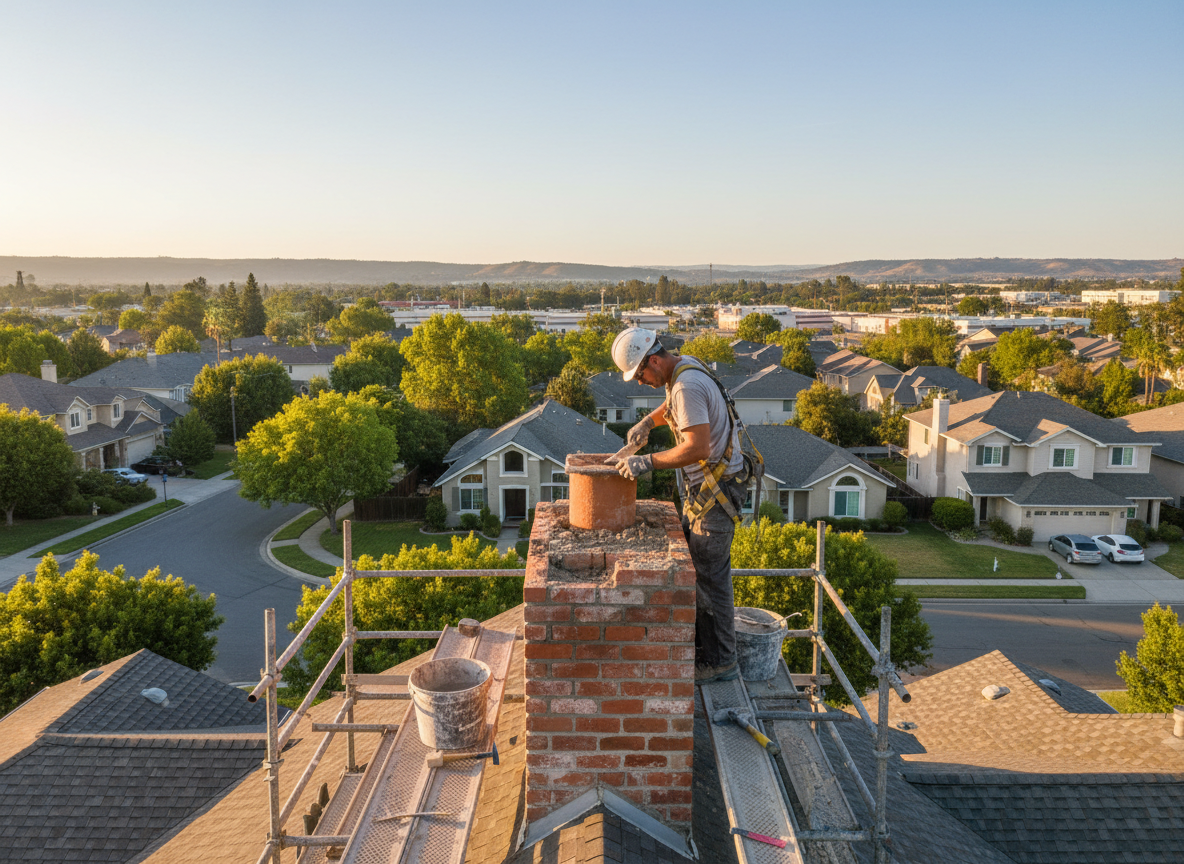
Oakley homes built before 1950 often feature unlined or partially lined brick chimneys that settle unevenly on the area's clay-heavy soils. This movement opens mortar joints and cracks flue tiles, allowing water to reach the attic and interior walls. Repair crews must first determine whether the chimney shares a wall with the structure or stands as a freestanding stack, because that detail changes how scaffolding and flashing are handled during tuckpointing or liner installation.
When water has already damaged the crown, crews remove the old concrete cap, install a new one with proper slope and a stainless steel rain cap, then check the flue with a camera to confirm no remaining gaps. In neighborhoods like Oakley and Hyde Park, many chimneys also serve gas appliances, so any liner work must maintain code-required clearances and proper termination height above the roofline to avoid draft problems during winter inversions common along the Mill Creek valley.
Homeowners sometimes attempt to seal only the exterior brick, yet interior flue damage continues to leak. A full repair includes verifying the smoke chamber shape, replacing missing or spalled brick, and re-flashing at the roof intersection with step flashing that matches the existing slate or asphalt shingles typical on these properties.
Technician insight
In Oakley the thing that catches most people out with residential chimney repair is how many pre-war homes have chimneys that settled with the house foundation, so the flue tiles are already offset before any water damage shows up. You end up chasing cracks higher than the obvious roof leak because the movement started at grade.
Offset Flue Tiles After Foundation Settlement
Homeowner in Oakley noticed water stains on the second-floor ceiling near the chimney. Inspection showed the chimney had moved with the house's clay-soil foundation, offsetting several flue tiles above the smoke chamber. Crew removed the crown, installed a stainless liner sized for the gas furnace, rebuilt the crown, and re-flashed the roof intersection. Draft test passed and no further interior staining occurred.
How it works
- 1
Site Assessment
Technician examines the chimney from roof to basement, checking for cracks, spalling, and water stains while noting shared-wall construction common in Oakley.
- 2
Flue Camera Inspection
Camera run through the flue identifies damaged tiles or creosote buildup that affects draft on older masonry stacks.
- 3
Material Selection and Repair
Crew selects matching brick, refractory mortar, or stainless liner based on the chimney's original construction and current use.
- 4
Crown and Flashing Work
New crown poured with slope and proper flashing installed to prevent future water entry at the roofline.
- 5
Final Draft Test
Smoke test confirms proper draft before leaving the site.
Pricing
Cost depends on chimney height, extent of masonry damage, and whether a new liner is required. Upfront quotes provided after inspection.