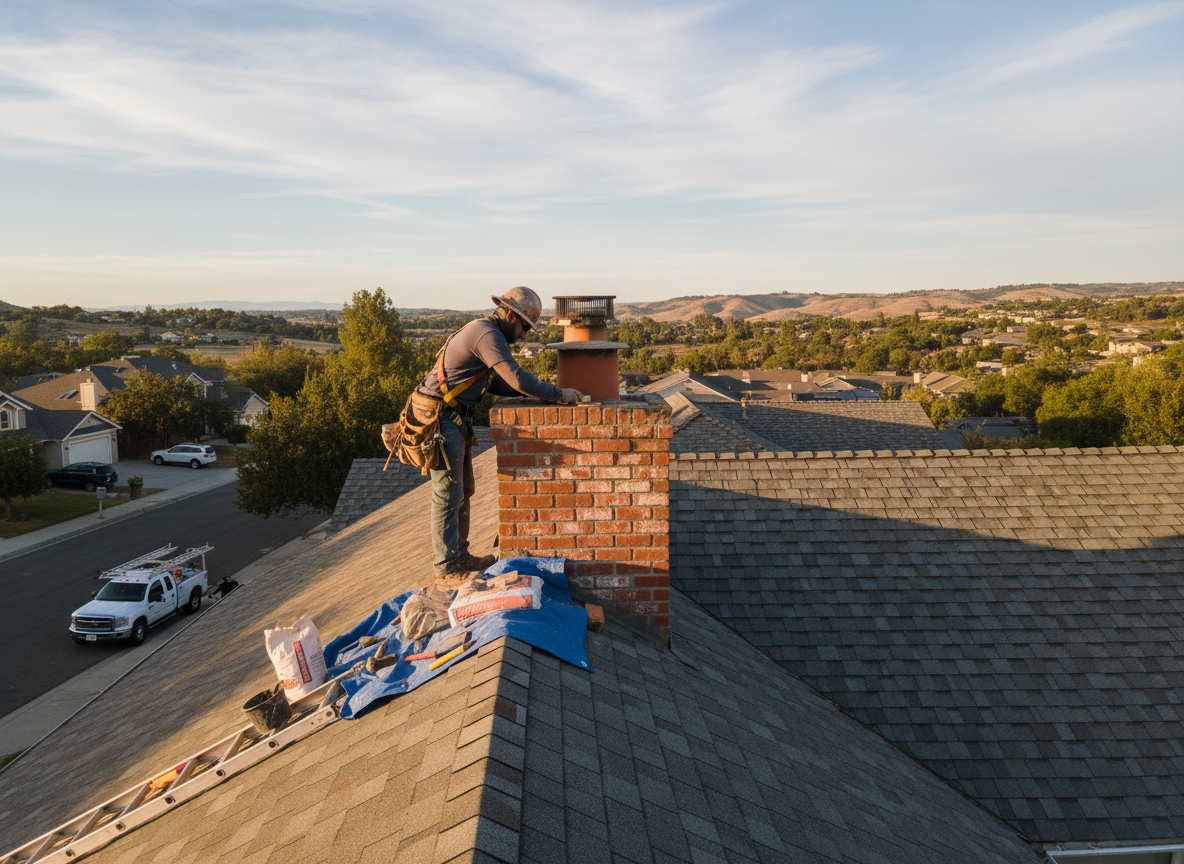
Oakley homes built between the 1920s and 1960s often have chimneys that penetrate steep asphalt-shingle roofs with limited access. When mortar joints erode or step flashing pulls away, water tracks under the shingles and into the attic or second-floor ceilings. We cut back damaged roofing, install new copper or lead-coated step flashing, and re-point the chimney base with high-lime mortar that matches the original color and texture so the repair blends with surrounding brick.
Heavy Ohio freeze-thaw cycles expand trapped moisture behind loose bricks, pushing them outward and cracking the crown. On these jobs we remove the failed crown, install a new precast or cast-in-place concrete cap with a positive slope, and tie it to the flue tiles with stainless-steel anchors. We also check the cricket or saddle behind the chimney on wider roofs; if the cricket is missing or undersized, we rebuild it so snow and debris do not pond against the masonry.
Working from 3075 Vandercar Way lets us reach Oakley addresses quickly even on 24/7 calls after storms. We carry extra lengths of counter-flashing and color-matched shingles on the truck so we can finish most roofline repairs in one day without leaving tarps overnight. Every job includes a final water test from the roof and a written report noting any additional tuck-pointing or liner concerns that should be addressed before winter.
Technician insight
In Oakley the thing that catches most people out with roof chimney repair is the narrow chase between the chimney and the second-floor dormer on 1930s brick houses; once water gets behind the siding there, it travels sideways and shows up two rooms away, so you have to open the roof wider than the obvious leak spot to find the real entry point.
Missing Cricket on Hyde Park Ridge Roof
Water was entering the master bedroom ceiling after every rain. We found the original cricket had been removed during a prior roof job and never replaced. We rebuilt a properly sized cricket, installed new step flashing, and re-shingled the valley. No further leaks appeared after the next heavy storm.
How it works
- 1
Site Assessment
We climb the roof from a ladder placed on stable ground, photograph the flashing, crown, and surrounding shingles, and note any interior staining or attic moisture.
- 2
Material Removal
Damaged shingles, old flashing, and loose mortar are cut away; debris is contained so it does not fall into gutters or landscaping.
- 3
Flashing and Crown Work
New step flashing is woven into the shingles, the crown is rebuilt or replaced, and counter-flashing is inserted into the chimney joints.
- 4
Final Test and Cleanup
We run a hose test, photograph the completed work, and remove all debris before leaving the property.
Pricing
Upfront quotes after on-site inspection; cost driven by roof pitch, chimney height, and extent of brick or flashing damage.